
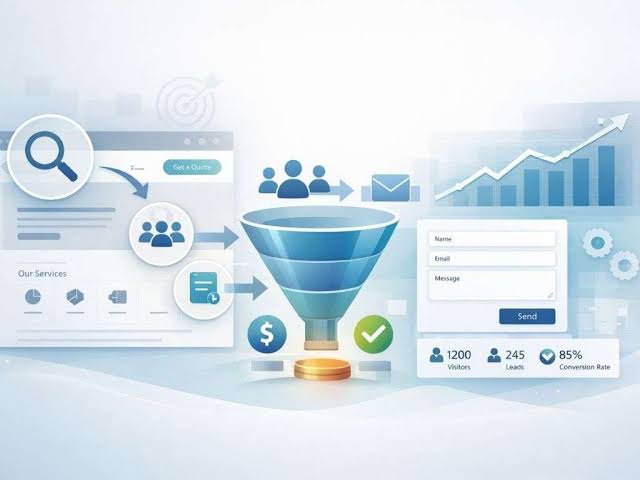
Most business owners approach launching a WordPress website as if the hardest part is simply getting it live. They focus on themes, plugins, colors, and layouts, believing that once the site is up, the job is done. In reality, that’s where the real work begins. A website, no matter how visually appealing or technically sound, does not automatically generate revenue. Without a clear strategy for attracting, engaging, and converting visitors, it remains nothing more than a digital placeholder — an expensive online brochure that rarely delivers measurable results.
Transforming a WordPress website into a true sales machine requires a shift in perspective. It’s not just about development; it’s about integrating technology with marketing, psychology, and data. Every element of your site must serve a purpose within a larger system designed to guide users toward a specific action. Whether that action is making a purchase, filling out a form, or scheduling a consultation, your website should be engineered to make that outcome as seamless and inevitable as possible.
Rethinking the Role of Your Website
A high-performing website is not an isolated asset. It functions as the central hub of your entire digital ecosystem. Traffic flows into it from search engines, paid advertising, social media platforms, and referrals. Once users arrive, the site must immediately communicate value, build trust, and guide them toward conversion.
Too often, businesses treat their websites as static entities. They design them once and leave them untouched for months or even years. Meanwhile, user expectations evolve, competitors improve, and algorithms change. A sales-driven website, by contrast, is dynamic. It is continuously refined based on performance data, user behavior, and market trends.
The Technical Foundation: Speed, Stability, and Structure
Before focusing on marketing or design, it is essential to address the technical fundamentals. A slow or unstable website undermines every other effort. Speed, in particular, has a direct impact on both user experience and conversion rates. If a page takes more than a few seconds to load, visitors are likely to leave before they even see your offer.
Achieving high performance requires disciplined development practices. This means avoiding bloated themes, limiting unnecessary plugins, and optimizing assets such as images and scripts. Clean code and efficient architecture are not luxuries; they are prerequisites for a site that can handle traffic and convert users effectively.
Equally important is mobile optimization. The majority of users now access websites through mobile devices, and their expectations are unforgiving. A site that feels clunky or difficult to navigate on a smartphone will lose potential customers instantly. Every interaction — from scrolling to clicking a button — must feel intuitive and responsive.
Design as a Tool for Conversion
Design is often misunderstood as purely aesthetic, but in the context of a sales-driven website, it is fundamentally about communication and persuasion. Within seconds of landing on your site, a visitor forms an impression of your brand. This impression influences whether they stay, explore, or leave.
A well-designed interface does more than look good. It guides the user’s attention, emphasizes key messages, and reduces friction. Clear typography, balanced layouts, and consistent visual elements create a sense of professionalism and trust. On the other hand, cluttered pages, inconsistent styling, or generic templates can signal low quality and drive users away.
Effective design also prioritizes clarity. Visitors should immediately understand what you offer, who it is for, and what they should do next. Ambiguity is the enemy of conversion. Every page should have a clear purpose, and every element on that page should support that purpose.
Building Trust in a Skeptical Market
Trust is one of the most critical factors in online conversions. Unlike physical stores, where customers can see and interact with products directly, online businesses must rely on digital signals to establish credibility. These signals include testimonials, case studies, professional design, secure payment systems, and transparent communication.
Modern consumers are highly skeptical. Before making a purchase, they often research a brand across multiple channels. They check social media profiles, read reviews, and look for evidence of real-world results. Your website must align with these external signals. A polished site paired with inconsistent or low-quality social media presence creates doubt and hesitation.
To build trust effectively, your website should tell a coherent story. It should showcase your expertise, highlight successful outcomes, and provide reassurance at every stage of the user journey. This is not about exaggeration or hype; it is about demonstrating value in a clear and authentic way.
Driving Traffic: Visibility as the Engine of Growth
Even the most optimized website cannot generate sales without traffic. Visibility is the fuel that powers your sales machine, and achieving it requires a strategic approach. There are two primary paths: organic search and paid advertising. Each has its own advantages, challenges, and timelines.
Organic search, often referred to as SEO, focuses on attracting users through search engines. It is a long-term strategy that involves optimizing your site’s structure, content, and authority. When done correctly, it provides a steady stream of high-intent visitors who are actively searching for solutions. This makes it one of the most sustainable and cost-effective channels over time.
Paid advertising, on the other hand, offers speed and scalability. Platforms like Google and Meta allow businesses to reach targeted audiences almost instantly. However, this approach requires careful management and precise tracking. Without accurate data, it becomes impossible to determine which campaigns are profitable and which are wasting budget.
The most effective strategy often combines both approaches. Organic search builds a strong foundation, while paid campaigns provide immediate results and valuable insights that can be used to refine your overall marketing efforts.
The Importance of Data and Tracking
A true sales machine is driven by data. Every click, scroll, and conversion provides information that can be used to improve performance. Without proper tracking, you are essentially operating in the dark, making decisions based on assumptions rather than evidence.
Implementing tools such as analytics platforms and tag managers allows you to monitor user behavior in detail. You can identify which pages perform well, where users drop off, and which traffic sources generate the most value. This information is invaluable for optimizing your site and maximizing return on investment.
Data also enables experimentation. By testing different headlines, layouts, and offers, you can discover what resonates most with your audience. Over time, these incremental improvements can lead to significant increases in conversion rates and revenue.
Integrating Social Media and Brand Presence
Your website does not exist in isolation. It is part of a broader digital presence that includes social media, email marketing, and other channels. These elements should work together to create a consistent and compelling brand experience.
Social media, in particular, plays a crucial role in building awareness and credibility. It provides an opportunity to showcase your personality, share insights, and engage with your audience. When users encounter your brand on multiple platforms, it reinforces trust and increases the likelihood of conversion.
Consistency is key. The visual style, tone of voice, and messaging on your social media profiles should align with your website. This creates a seamless experience that strengthens your brand identity and makes your business more memorable.

Continuous Optimization: The Path to Long-Term Success
Turning a WordPress website into a sales machine is not a one-time project. It is an ongoing process of analysis, testing, and refinement. Markets evolve, competitors adapt, and user behavior changes. To stay competitive, your website must evolve as well.
Regular performance reviews help identify areas for improvement. This might involve updating content, improving page speed, refining design elements, or adjusting marketing strategies. The goal is to eliminate friction, enhance user experience, and increase conversions over time.
It is also important to stay informed about industry trends and technological advancements. New tools, techniques, and platforms can provide opportunities to gain an edge over competitors. Businesses that embrace innovation are better positioned to grow and adapt in a rapidly changing digital landscape.
Building the Right Infrastructure for Growth
Managing all aspects of a high-performing website can be overwhelming, especially for business owners who already have numerous responsibilities. Attempting to handle development, design, content creation, and marketing alone often leads to inefficiencies and missed opportunities.
Successful businesses recognize the value of specialization. By working with experienced professionals, they can ensure that each component of their digital strategy is executed effectively. This not only saves time but also leads to better results.
Investing in the right infrastructure — whether it involves hiring experts, using advanced tools, or partnering with agencies — is essential for scaling your operations. It allows you to focus on your core business while ensuring that your website continues to perform at a high level.
From Website to Revenue Engine
At its core, transforming a WordPress website into a sales machine is about alignment. Your design, development, content, and marketing must work together toward a common goal: generating revenue. When these elements are integrated effectively, your website becomes more than just an online presence. It becomes a powerful tool that drives growth, builds relationships, and creates lasting value for your business.
The difference between a passive website and a high-performing sales engine is not luck or chance. It is the result of deliberate strategy, consistent effort, and a willingness to adapt. Businesses that understand this principle are the ones that turn their websites into assets that actively contribute to their success, rather than liabilities that simply exist in the background.